
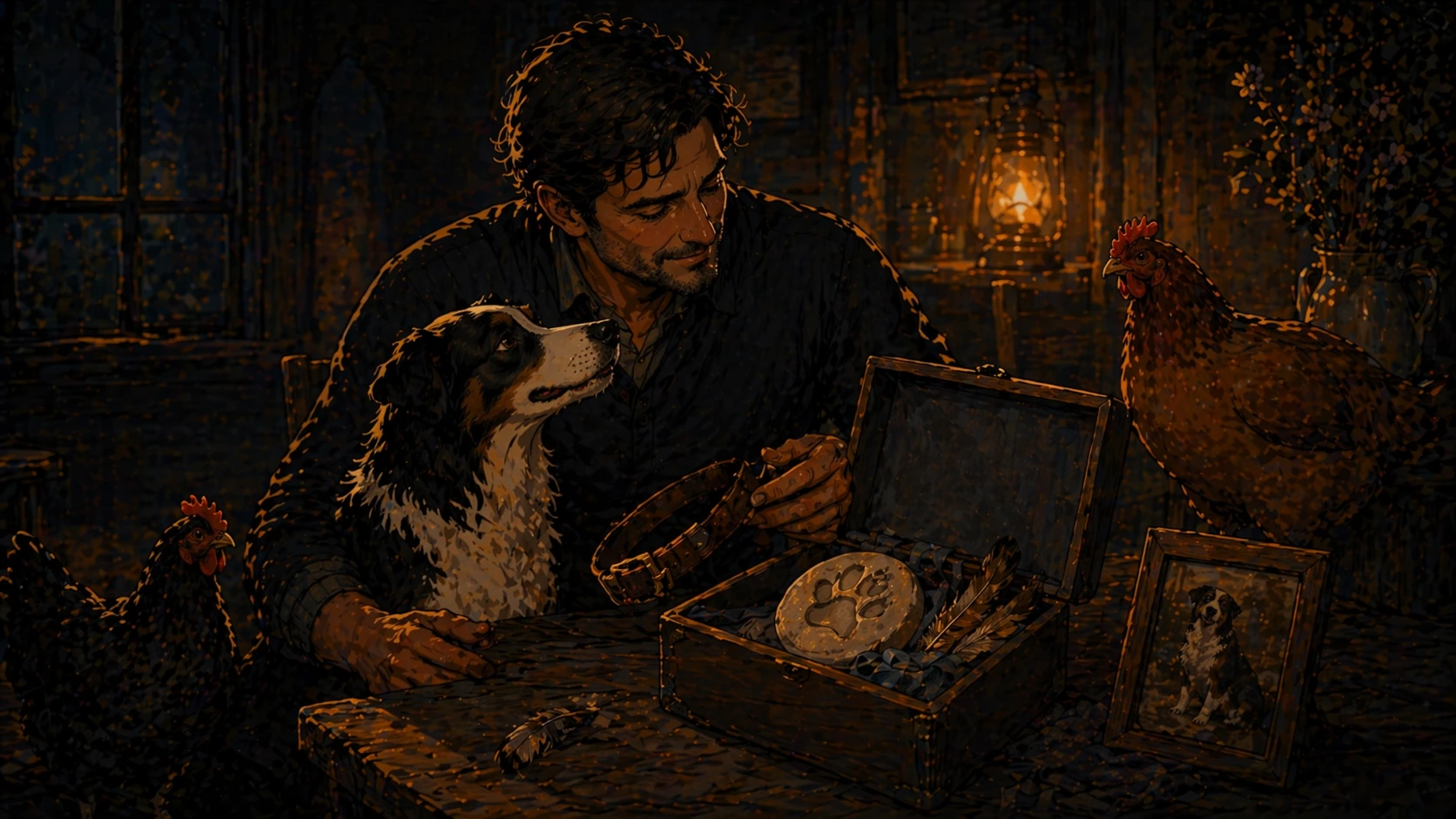
Your pet died, and now you have to explain death to a child. There is no script for this. But there are approaches that help, and approaches that make things harder, and they differ by age.
Before we get to the age breakdowns, here is the most important principle: do not lie. Do not say the dog ran away. Do not say the cat went to live on a farm. Children figure out the truth eventually, and when they do, they lose trust in you alongside the pet they already lost. That is two losses instead of one.
**Toddlers (ages 2-3).** Toddlers do not understand death as permanent. They will ask where the pet is, repeatedly, for days or weeks. This is not them being difficult. It is their brain unable to process the concept of gone forever. Answer simply and consistently: Max died. That means his body stopped working and he is not coming back. We are sad because we miss him. You will say this many times. That is normal.
Toddlers primarily need routine stability. If the pet was part of bedtime or morning rituals, acknowledge the gap: I know Max used to sleep next to your bed. I miss that too. Do not rush to fill the gap with a new routine. Let them feel the absence.
**Preschoolers (ages 4-5).** Preschoolers understand death is bad but may not understand it is permanent. They may think the pet will come back. They may ask if they caused the death by being too rough or too loud. This magical thinking is developmentally normal.
Address the guilt directly: You did not make Bella sick. Nothing you did caused this. Bella's body got old and stopped working. Be concrete. Avoid abstractions like passed away or crossed the rainbow bridge — these can confuse a child who thinks literally. Dead means the body stopped working.
Preschoolers may also express grief through behavior changes rather than words. Regression in toilet training, increased clinginess, sleep disruption, or sudden fears are all normal grief responses at this age.
**Grade schoolers (ages 6-10).** Children in this range understand death is permanent and irreversible. They may ask detailed questions: Did it hurt? What happens to the body? Where is she now? Answer honestly at their level. If your pet was euthanized: The vet gave her medicine that made her fall asleep first, so she could not feel anything. Then her body stopped working. It did not hurt.
Grade schoolers often want to do something with their grief. Let them draw a picture, write a letter, choose a photo for a frame, or help plant something in the garden. Channeling grief into action is healthy at this age. It is not avoidance — it is processing.
They may also worry about other deaths. Are you going to die? Is my other pet going to die? These questions are not morbid. They are a child connecting dots for the first time. Answer honestly: Everyone dies eventually. But I am healthy and I plan to be here for a very long time.
**Tweens and teens (ages 11-17).** Adolescents understand death fully. They may grieve intensely but hide it, because showing emotion feels vulnerable at an age where everything feels vulnerable. They may be angry — at you for making the decision, at the vet, at the unfairness of it.
Do not force conversation. Let them know you are available: I know you are hurting. I am too. You do not have to talk about it, but I am here when you want to. Respect their process even if it looks different from yours. Some teens grieve by withdrawing. Some grieve by crying openly. Some grieve by immediately wanting another pet. None of these responses are wrong.
Teens who had a particularly close bond with the pet — the dog they grew up with, the cat who slept on their bed since they were six — may grieve as intensely as any adult. Take their grief as seriously as you would want yours taken.
**What not to say at any age.** Don't cry. Be strong. They are in a better place. We can get a new one. It was just a pet. At least they had a long life. Every one of these dismisses the child's actual feeling. The feeling is: I lost someone I loved and it hurts. That feeling does not need to be corrected, minimized, or redirected. It needs to be witnessed.
**When to worry.** Grief in children typically follows a wave pattern — intense at first, then gradually less frequent over weeks and months. If a child is still unable to function at school after several weeks, if they develop persistent sleep problems, if they refuse to eat, or if they express thoughts of wanting to die to be with their pet, those are signals to involve a professional.
**Show your own grief.** Children learn how to grieve by watching you. If you hide your tears, they learn that grief should be hidden. If you say I am really sad today and I miss him, they learn that sadness is allowed. You do not need to perform grief. You just need to not hide it.
Your child is watching you navigate this. They are learning that love sometimes ends in loss, and that loss is survivable. That is one of the most important things you will ever teach them.
Keep Reading


Stay close to the work.
Gentle updates as Evermeadow takes shape. No spam.