
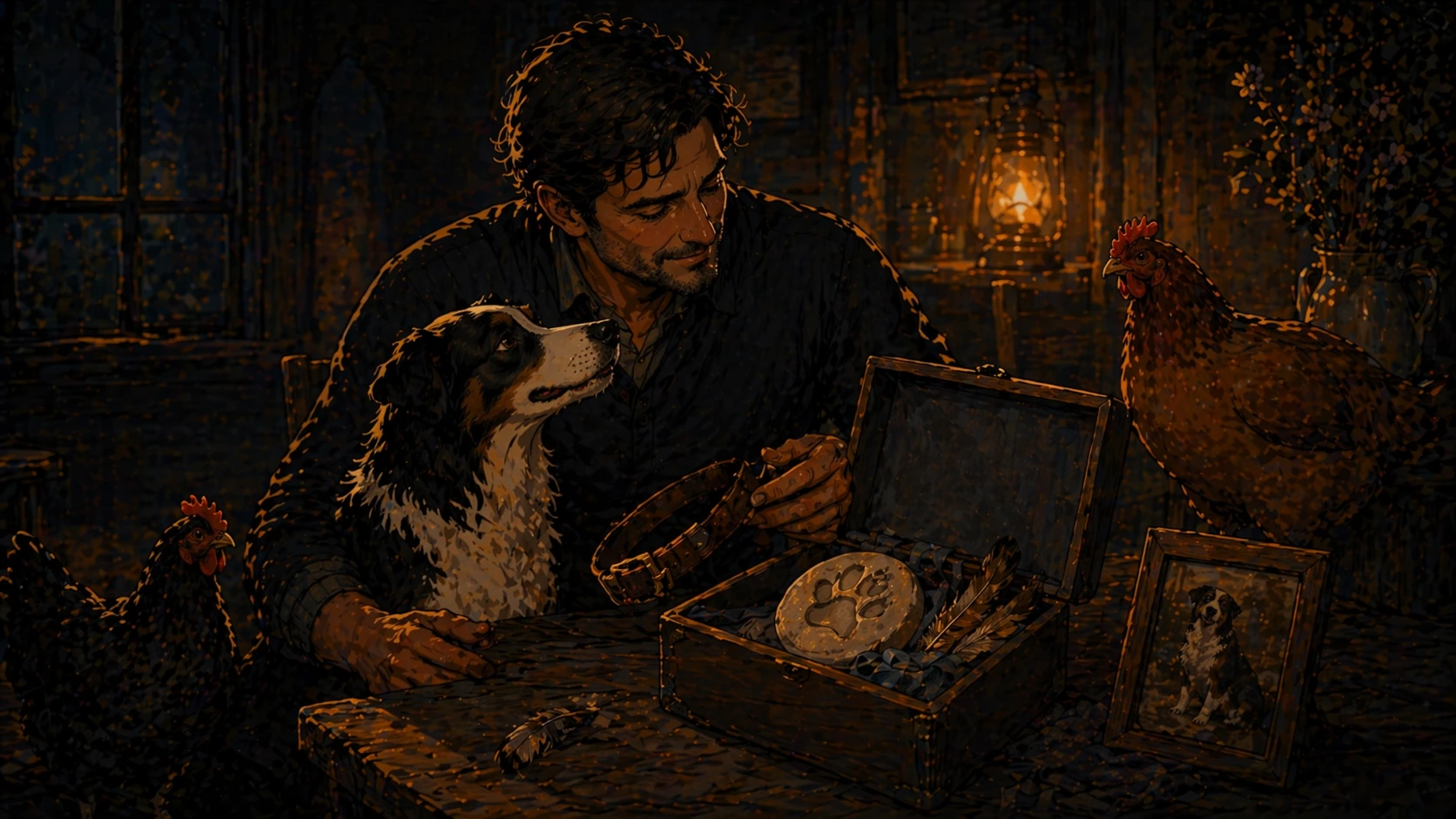
The honest answer is: there is no answer. Grief does not follow a schedule. It does not resolve in stages the way textbooks suggest. It moves through you at its own pace, and the pace is different for everyone.
Some people feel the worst of it in the first week: the empty house, the phantom sounds, the unbearable quiet where a heartbeat used to be. Others feel fine for a month, then collapse at a smell, a toy under the couch, a stranger walking a dog that looks just like theirs.
The grief is not proportional to the time you had together. A cat you had for three years can leave a hole as vast as a dog you had for fifteen. What matters is the depth of the bond, not its duration.
Culturally, we are terrible at giving pet grief the room it needs. People return to work the next day. Friends say 'at least it wasn't a person.' The absence of permission to grieve openly makes the grief harder, not lighter.
What most people find is that grief does not end. It changes. The sharp, breathless pain of the first weeks gradually becomes a duller ache, a tenderness. You start to remember without flinching. You can say their name without your throat closing.
This is not 'getting over it.' It is learning to carry it. The love does not go away, and neither does the grief, because they are the same thing, wearing different faces.
If you are in the early days, know this: whatever you are feeling is not too much. It is evidence of how fully you loved. And that is not something to recover from. It is something to honor.
If You Need This Right Now
The First Crossing
A guided farewell ceremony for the loss of a pet. Free, private, and takes about five minutes.
Begin the CeremonyKeep Reading
Stay close to the work.
Gentle updates as Evermeadow takes shape. No spam.