

You are not imagining it. The dog is standing at the door, waiting. The cat is checking the other cat's favorite spot, over and over. The horse is pacing the fence line. Your other animals know.
Animals grieve. The science is clear on this, even if the culture has been slow to acknowledge it. Elephants mourn their dead. Corvids hold vigils. Dogs lose their appetite after a companion dies. Cats become clingy or withdrawn.
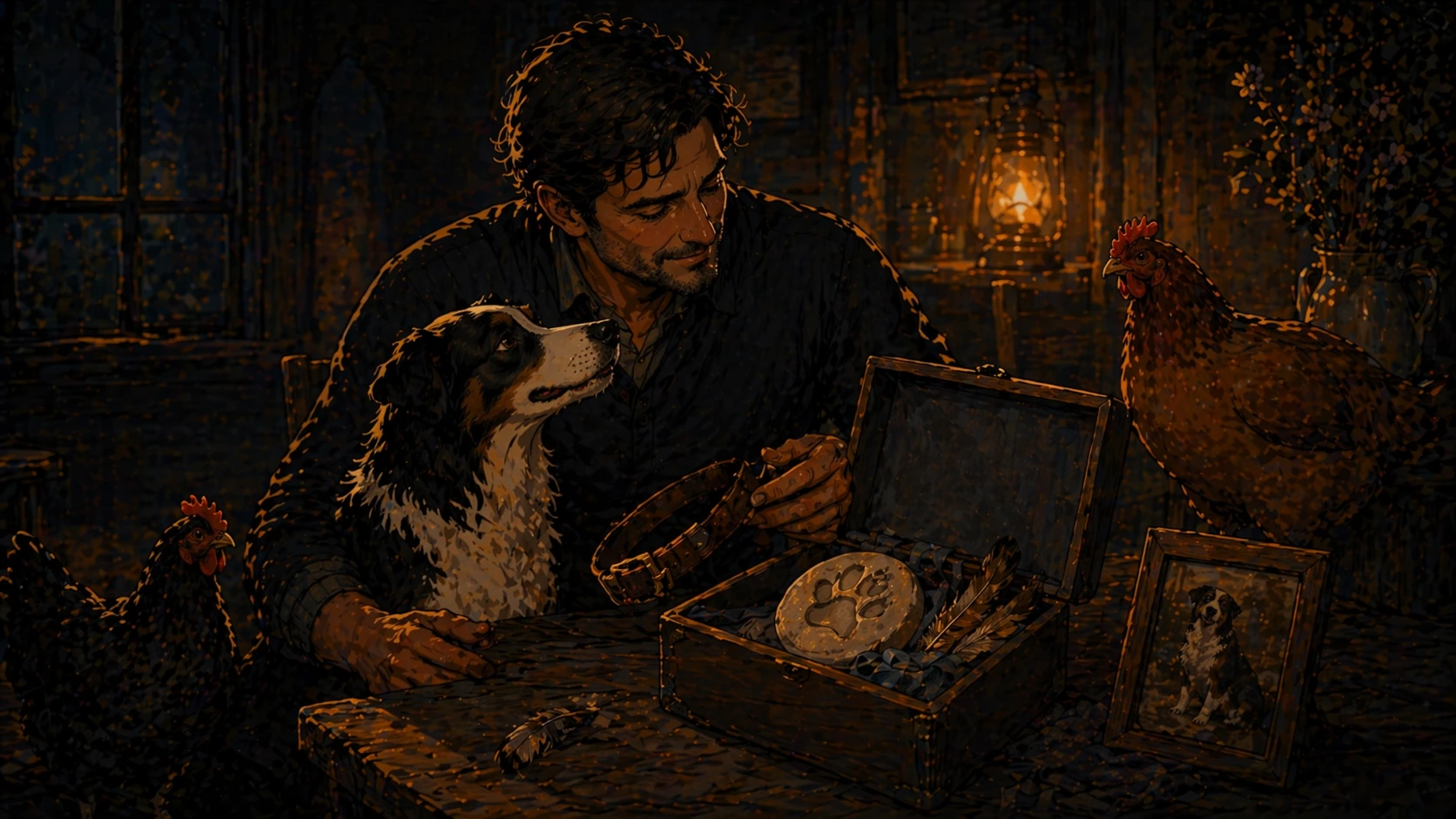
What makes this harder for you is that you are grieving too. You are trying to hold your own loss while also caring for animals who cannot understand why someone is missing. They look to you for reassurance, and you are not sure you have any to give.
Here is what helps: routine. Keep feeding times the same. Keep walk schedules the same. The predictability of routine is one of the few things you can offer when the emotional landscape has shifted.
Give them access to the space where the lost animal used to be. Let them sniff the bed, the blanket, the favorite spot. This is not morbid. It is information. They are processing the absence in the way they know how.
Watch for changes. A dog that stops eating for more than two days needs a vet visit. A cat that hides for a week may need intervention. Most animals adjust within a few weeks, but some, particularly bonded pairs, may need more support.
You do not need to explain death to them. You just need to be present. Which, right now, may be the hardest and most generous thing you can do, because being present means sitting in the same grief they are sitting in, together.
If You Need This Right Now
The First Crossing
A guided farewell ceremony for the loss of a pet. Free, private, and takes about five minutes.
Begin the CeremonyKeep Reading
Stay close to the work.
Gentle updates as Evermeadow takes shape. No spam.