
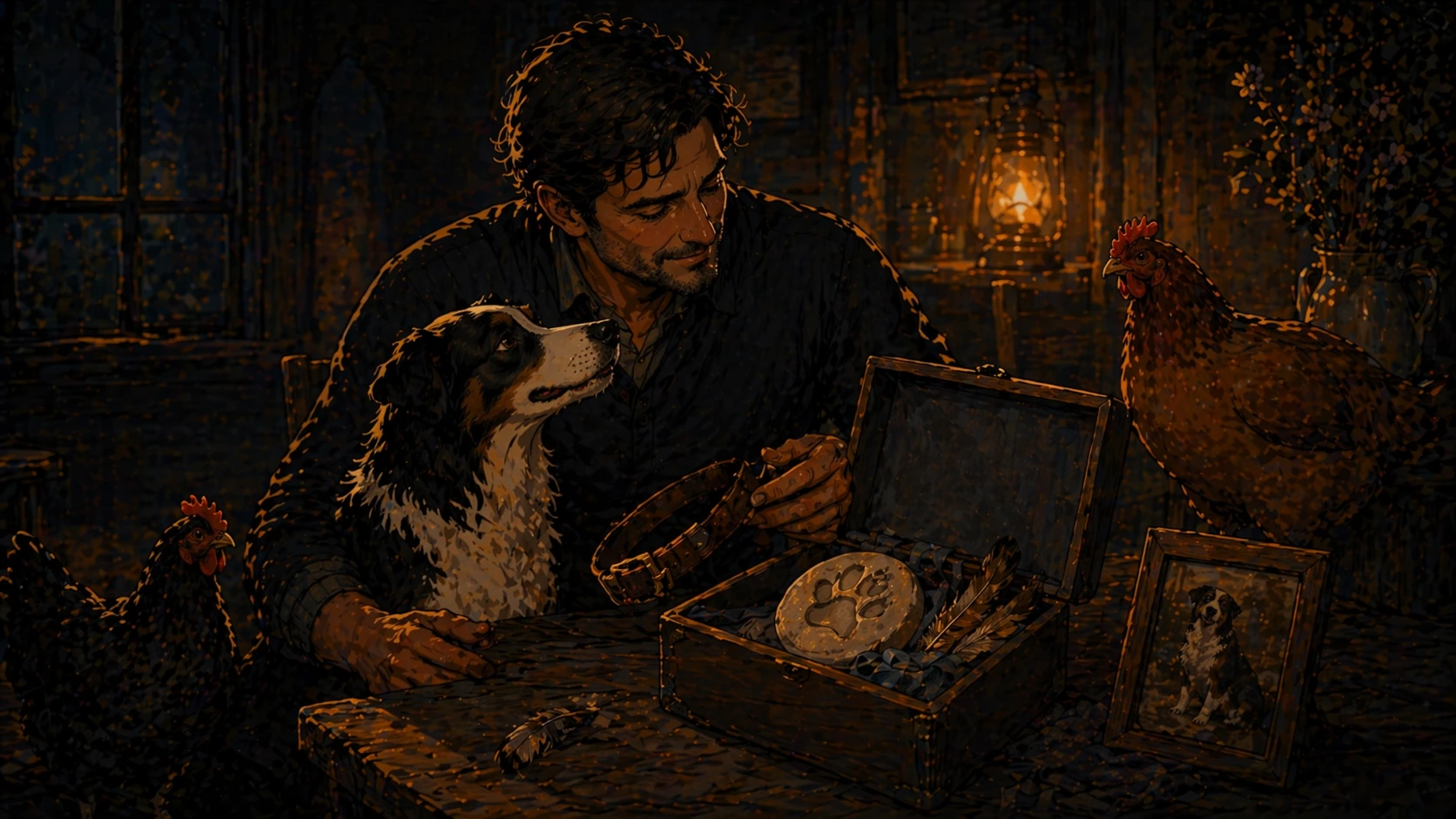
You made the decision. The vet said it was time, or close to time, and you agreed. Now you cannot stop asking: was it too soon?
This question is not rational. It is not a question your brain is asking because it needs information. It is a question your grief is asking because it needs somewhere to land. Guilt is easier to carry than helplessness.
Here is what veterinarians will tell you, if you ask them directly: almost no one brings their pet in too early. The overwhelming pattern is the opposite. People wait too long because they love their animal and cannot face the decision.
Dr. Alice Villalobos, the veterinary oncologist who created the HHHHHMM quality of life scale, has said that the most common regret she hears from pet owners is not that they acted too soon — it is that they waited too long and watched their animal suffer.
Think about what too soon would actually mean. It would mean your pet was not suffering. It would mean they still had good days ahead. But if your vet supported the decision, they saw something you may not have wanted to see: the trajectory was only going one direction.
The guilt you feel is not evidence that you made the wrong choice. It is evidence that you loved your pet enough to take their suffering seriously, even when it cost you everything.
You are replaying the last days looking for signs you missed. But you are looking at those days through grief, not through the clarity you had when you were living them. You saw your pet struggle to stand. You saw them stop eating. You saw them withdraw from the life they used to love.
Some people fixate on a single good moment — a tail wag, a purr, a moment of recognition — and use it as proof there was more time. But one good moment in a day of pain is not a good day. You knew that then. Grief is making you forget.
The decision to euthanize is not a decision to end a life. It is a decision to end suffering when the suffering has no exit. You did not choose death over life. You chose peace over pain.
If you had waited, what would have happened? More days of the same decline you were already watching. More pain for your pet. More of you standing in the kitchen at 2 AM wondering if today was the day. The uncertainty would not have resolved — it would have deepened.
Your vet did not euthanize your pet because you asked them to. They agreed because their professional judgment confirmed what you already suspected: your pet was suffering, and the suffering was not going to improve.
There is a particular cruelty in this kind of guilt. You made the hardest, most selfless decision a pet owner can make, and your reward is a brain that tortures you with what-ifs. That is not justice. That is grief doing what grief does.
You did not fail your pet. You were there. You held them. You made sure their last moments were not spent alone on a cold floor in a body that had already given up. You gave them the one thing no one else could: a gentle ending.
The question was it too soon will fade. Not because you find an answer, but because you eventually stop needing one. The love does not require justification. Neither does the decision it led to.
If you are reading this at 3 AM, unable to sleep, here is what I want you to know: the fact that you are asking this question at all is proof that you made the decision for the right reasons. People who act carelessly do not lie awake wondering if they were careful enough.
You were careful enough. You were brave enough. You were kind enough. Your pet knew it then, even if you cannot feel it now.
Keep Reading


Stay close to the work.
Gentle updates as Evermeadow takes shape. No spam.